PALM BAY, FL (The Palm Bayer) — Palm Bay’s first citywide disaster debris collection begins Saturday, November 14. Crews start in the Northeast section of the city, the area that experienced the most significant impacts from the recent flooding, and then continue working throughout the city.
Do not expect every pile to be gone on Saturday. The city says the initial pass will take several days to complete because of the significant volume of debris. Residents get two opportunities in all: this initial citywide pass, and then one additional citywide pass for remaining disaster debris.
The six categories
Sort your debris into six separate categories:
- Vegetative Debris: branches, limbs, logs, and brush.
- Construction and Demolition Debris: fencing, shingles, lumber, drywall, carpet, furniture, and building materials.
- Appliances and White Goods: refrigerators, washers, dryers, stoves, water heaters, and A/C units. Do not release refrigerants.
- Electronics: TVs, computers, monitors, and printers.
- Household Hazardous Waste: paint, batteries, cleaners, pesticides, oil, and propane cylinders. This category needs special handling, so place it out only as directed by local officials.
- Regular Household Garbage: food waste, bagged trash, and packaging. Keep it separate from disaster debris, and place it out per regular collection guidelines.
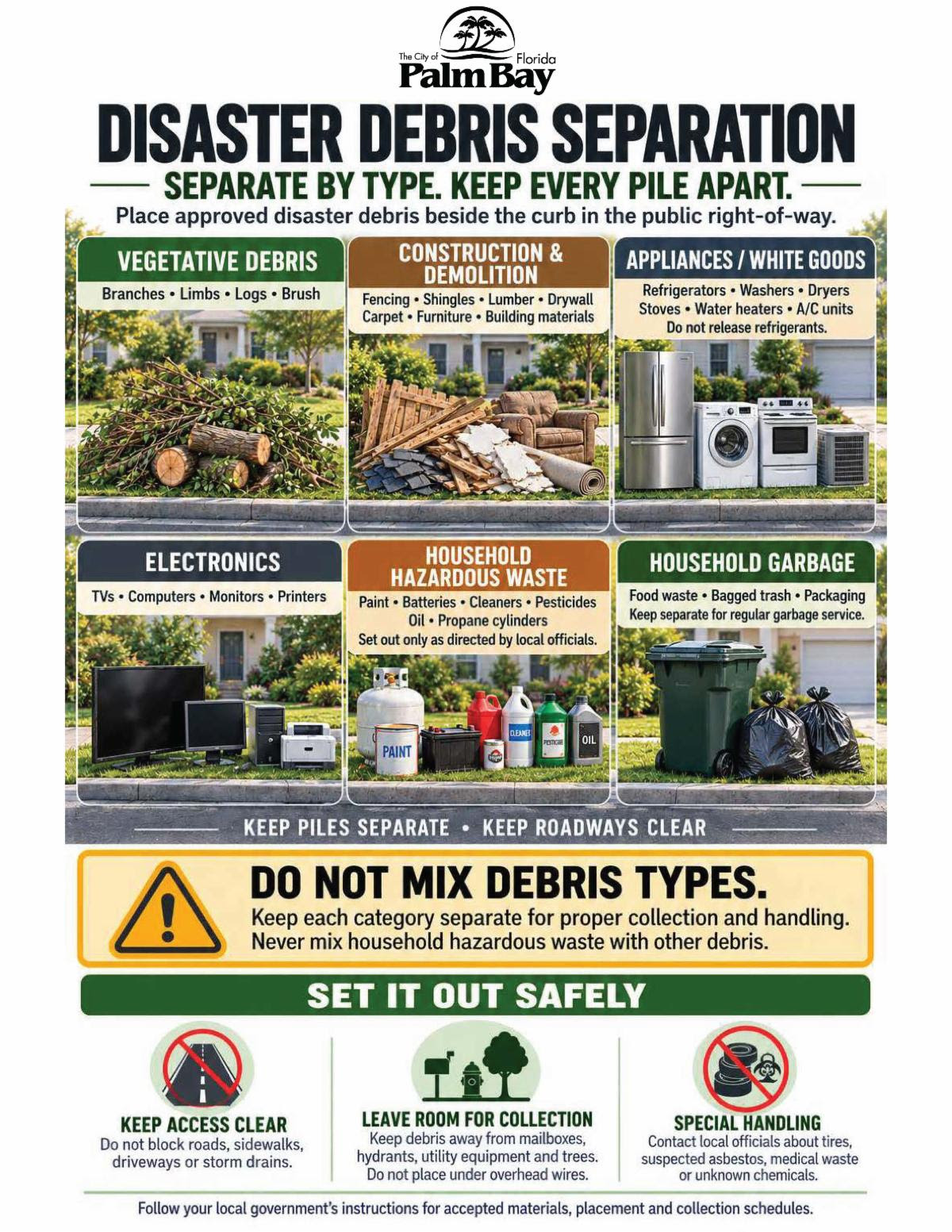
One point of confusion to clear up: a second city graphic shows three piles instead of six, but the six categories in the city’s release text are the ones that govern.
Where to put it
Keep each category in its own separate pile. Place approved disaster debris beside the curb in the public right-of-way.
Do not block roadways, sidewalks, driveways, or storm drains. Keep debris away from mailboxes, fire hydrants, utility equipment, trees, and overhead wires.
Do not mix hazardous materials with other debris.
Source: City of Palm Bay news release, “Citywide Debris Collection Begins Saturday, November 14,” November 12, 2026.